

A safe fire pit on grass is not a matter of placing a bowl in the yard and lighting a match. Grass is living fuel, often dry at the surface even when the soil beneath feels damp. Heat can travel downward, embers can move farther than expected, and one beautiful evening can leave a scorched circle that takes months to recover.
The better approach is simple: create a deliberate fire zone between the flame and your lawn. With the right elevated fire pit, a heat-resistant base, and enough room to tend the fire properly, the backyard can become a place you will always remember - without turning the next morning into damage control.
Why grass changes the fire-pit equation
A fire pit on pavers or gravel has a naturally noncombustible surface beneath it. A fire pit on grass does not. The risk is not limited to a visible flame touching the lawn. Radiant heat from the bottom of a fire bowl can dry, discolor, or ignite grass. Fine ash and small coals can fall through gaps. When wind rises, sparks may land well beyond the pit itself.
The type of fire pit matters. A low, open bowl radiates more heat toward the ground than an elevated model with substantial leg clearance. A pit with a solid ash bed may protect the lawn better than one with open ventilation below, but it can still transfer damaging heat. There is no single setup that makes every product safe on every lawn.
Start with the manufacturer’s instructions for your specific fire pit. They define the required clearances, approved surfaces, fuel types, and operating limits. If the manual does not explicitly approve grass, treat grass as unsuitable unless you create a protective surface beneath the unit.
Build the base before you build the fire
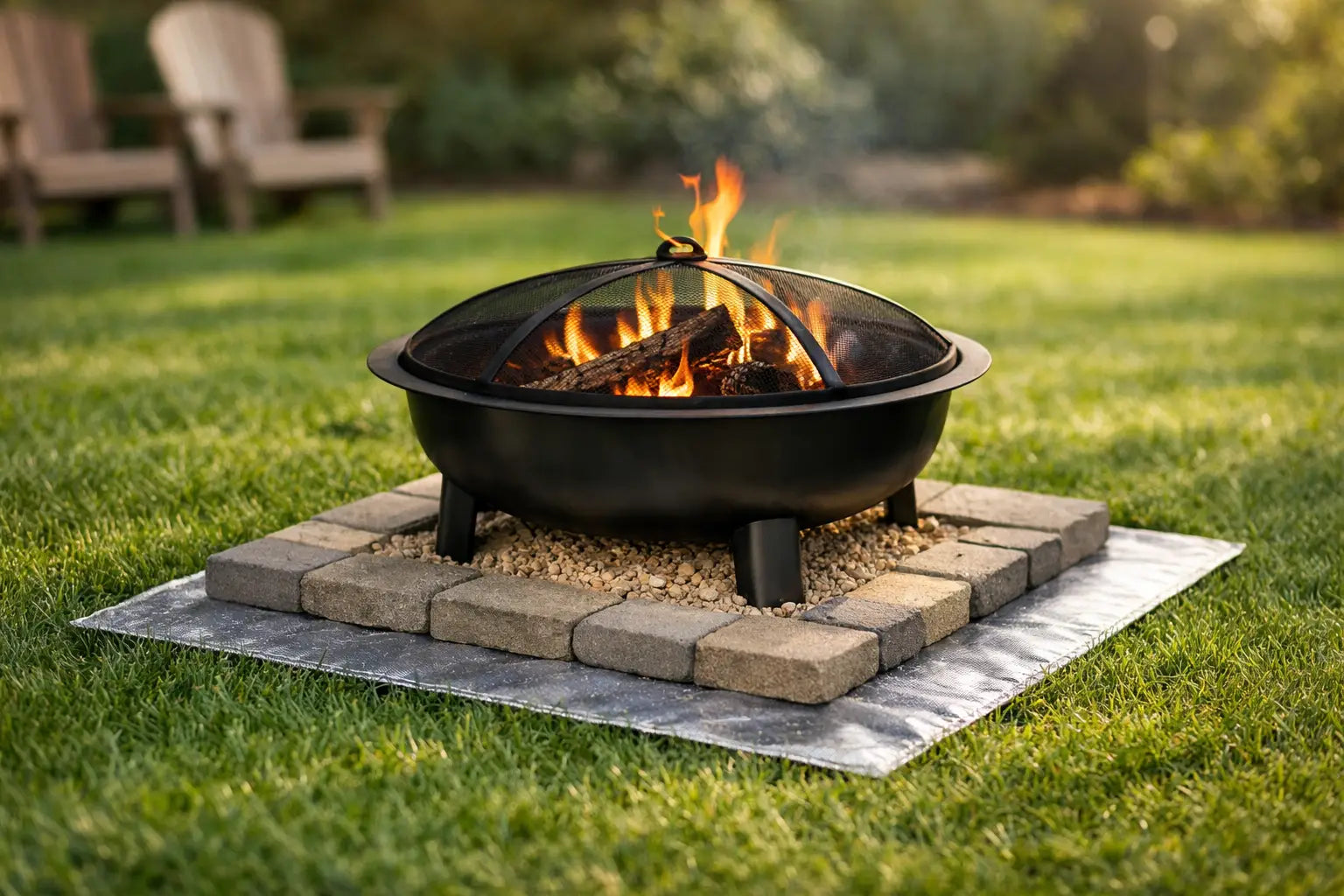
The safest solution is a permanent or semi-permanent noncombustible pad. Stone, concrete pavers, brick, compacted gravel, or a purpose-built fire-pit mat can create the separation that grass alone cannot provide. The base should extend beyond the footprint of the fire pit so that falling embers and hot ash do not land directly on the lawn.
For a portable setup, use a heat shield or fireproof mat designed for high-temperature use, then place the fire pit on top only if both manufacturers permit that arrangement. A thin outdoor rug, sheet of plywood, cardboard, or ordinary grill mat is not a substitute. These materials can scorch, trap heat, or ignite.
A practical base should be level and stable. A fire pit that rocks when loaded with logs is not ready for use. Check the ground after rain as well. Soft turf can allow legs to sink, shifting the pit and reducing its clearance from the grass.
Give the fire pit room to breathe
Clear the area around the pit of dry leaves, pine needles, mulch, garden debris, and low-hanging branches. A clean circle is more useful than a crowded patio arrangement where chairs, blankets, and firewood drift close to the flame over the course of an evening.
Keep seating far enough back that guests do not need to reach over the fire to adjust a log or retrieve food. The exact distance depends on the size and design of the pit, but comfort is a good indicator: if people are leaning away from the heat or stepping around stored firewood, reset the layout.
Overhead clearance deserves the same attention. Do not light a fire beneath a covered porch, low pergola, awning, tent canopy, or tree limbs unless the structure and fire pit are specifically designed and approved for that use. Smoke and heat collect quickly under a ceiling, even on an otherwise open patio.
Choose a fire pit designed to stay elevated
For grass, elevation is not a design detail. It is a safety feature. A purpose-built, raised fire pit keeps the main source of radiant heat farther from the ground and makes it easier to position a protective base beneath it.
Look for sturdy legs, a stable footprint, and construction that keeps hot ash contained. A spark screen or lid is also valuable, especially for open wood fires, though it does not eliminate the need for clearance or a proper base. Screens help control airborne embers, not ground heat.
Modular systems can be especially useful because they allow the setup to match the occasion. A low flame for conversation, a grill surface for dinner, or a more open arrangement for camp-style cooking each creates a different heat pattern. WOOD&BURN designs its fire systems around this kind of adaptable gathering, but the rule remains the same with any brand: configure the equipment as instructed, and never improvise structural parts with loose blocks or unstable stands.
Burn clean wood and keep the flame measured
The best backyard fires are intentional, not oversized. Use dry, seasoned firewood that fits fully inside the fire pit. Wet wood produces more smoke and popping embers; oversized logs can roll, extend beyond the rim, and create a flame that is difficult to manage.
Avoid construction lumber, painted or treated wood, pallets, household trash, charcoal in a wood-only fire pit, and liquid accelerants. Those materials can release harmful fumes or cause sudden flare-ups. If you need help starting the fire, use a small amount of dry kindling and an appropriate fire starter, then add wood gradually.
A modest fire is easier to cook over, easier to talk around, and far easier to extinguish. It also protects the lawn, nearby landscaping, and the calm rhythm of the gathering. If wind begins pushing smoke and sparks sideways, reduce the fire or put it out. Wind is not a minor inconvenience - it changes the risk immediately.
Keep water and tools within reach
Before lighting, have a hose, bucket of water, or fire extinguisher ready. A metal poker or tongs let you reposition logs without getting too close, and heat-resistant gloves make tending safer. These items should be beside the fire zone, not stored in a garage across the yard.
One capable adult should remain responsible for the fire from the first spark until the ashes are cold. That does not make the evening formal. It makes it relaxed. When everyone assumes someone else is watching the fire, no one is.
Know when grass is the wrong surface
Some conditions call for a different plan. During drought, fire restrictions, high winds, or local burn bans, do not use a wood fire pit on grass or any other surface. Municipal rules, homeowners’ associations, campground policies, and county fire authorities may set stricter requirements than a product manual.
Freshly cut grass is not automatically safe, either. Dry clippings are combustible, and mowing can leave them under or around the base. Synthetic turf is another clear no-go unless its manufacturer specifically approves the use of a compatible heat barrier and fire pit. Many artificial grasses can melt or release unpleasant fumes long before they ignite.
If you host often, a dedicated gravel or paver fire area is usually the better investment. It gives you a consistent, attractive place to gather and removes the guesswork every time the forecast calls for a clear night.
Extinguish with the same care you used to set up
When the evening winds down, stop adding wood early enough for the fire to burn down naturally. Spread remaining coals carefully with a metal tool, then apply water slowly and thoroughly. Stir the ashes, add more water, and repeat until there is no hiss, steam, or remaining heat.
Do not leave a fire pit on grass overnight with embers inside, even if the flames appear gone. Ash can retain heat for many hours. Once fully cold, remove ash according to the fire pit’s instructions and inspect the protective base and surrounding grass for stray embers or heat damage.
A well-made fire area does more than protect a lawn. It gives everyone permission to settle in - to cook one more course, tell one more story, and stay close to the warmth a little longer.
Share:
Choosing a Portable Fire Pit for Tailgating
Best Woods for Campfires That Burn Better