

A fire can look perfect from across camp, then fill the cooking area with smoke the moment you settle in. The difference is often the fuel. Choosing the best woods for campfires gives you steadier heat, a cleaner flame, and more time around the fire instead of crouching beside it with an armful of damp logs.
Good firewood is part of good campsite design. It affects how easily dinner comes together, how long the group stays warm, and whether the fire feels like the heart of the evening or a problem to manage. The right species matters, but seasoning, log size, and local availability matter just as much.
What Makes Firewood Good for a Campfire?
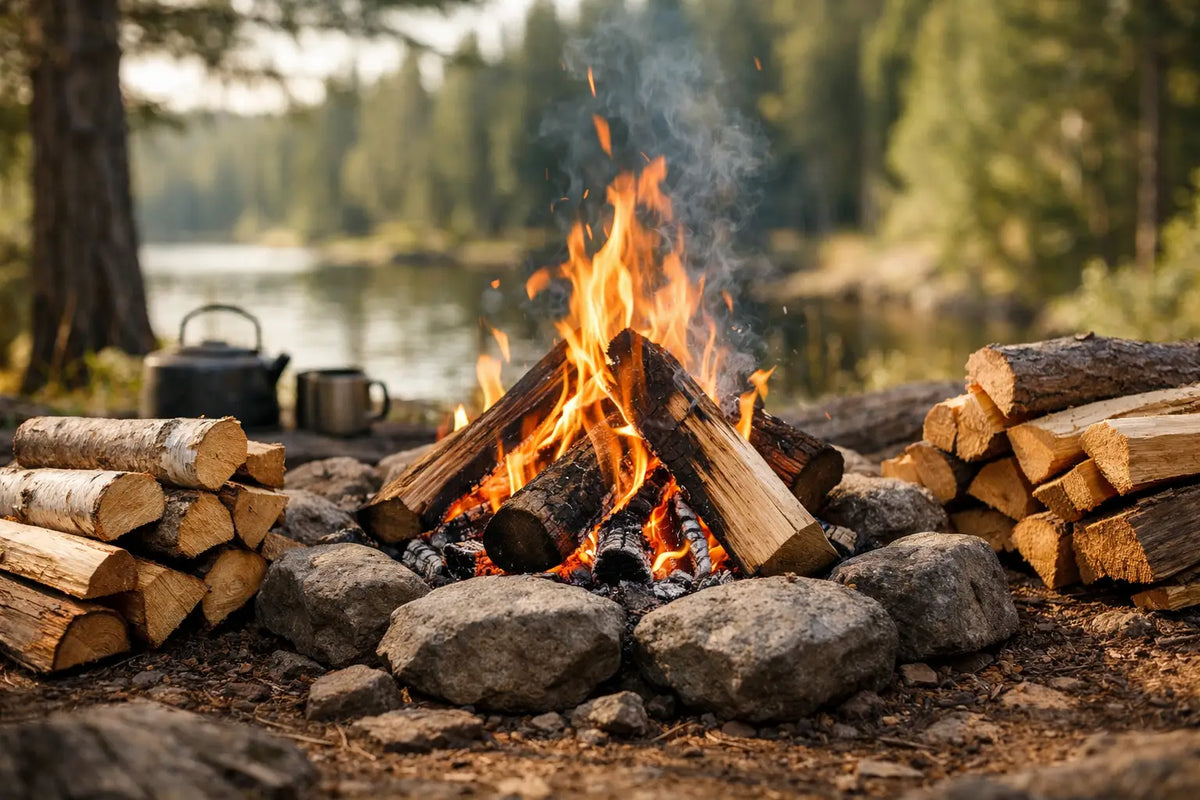
The best campfire wood is dry, dense enough to burn for a while, and easy to manage in the fire pit or stove you are using. Hardwood is usually the first choice because it burns more slowly and produces lasting coals. Those coals are especially useful for grilling, Dutch oven cooking, and holding a comfortable fire through a long conversation.
Moisture is the nonnegotiable factor. Seasoned firewood has been split and dried long enough to burn efficiently, ideally with a moisture content below 20 percent. Dry wood lights faster, gives off more heat, and makes less smoke than freshly cut wood. It should feel lighter than green wood, show cracks at the ends, and make a sharp knocking sound when two pieces are struck together.
Softwoods have a place, too. They catch quickly and make excellent kindling, but most burn faster and can throw more sparks. Use them to establish the fire, then add hardwood logs once a bed of coals has formed.
The Best Woods for Campfires
Oak: The Long-Burning Standard
Oak is one of the best all-around choices for a campfire. It is dense, dependable, and known for a slow, even burn that creates substantial coals. If your plan includes a late meal on the grill followed by hours of warmth, oak gives you the patient heat that makes both possible.
The trade-off is that oak can be harder to light than lighter woods, particularly in large rounds. Start with dry kindling and smaller split pieces, then build up to the heavier logs. Well-seasoned oak is worth the preparation, especially in cool weather.
Hickory: High Heat With a Cooking Advantage
Hickory burns hot, long, and with a distinctive aroma that works beautifully around live-fire food. It is a strong choice for grilling meats, vegetables, and cast-iron meals over a controlled coal bed. Like oak, it is dense and rewards a deliberate fire build rather than a rushed match-and-log approach.
Hickory smoke is flavorful, but it can become assertive if the wood is not fully seasoned or the fire is starved of oxygen. Use it in moderation for open-fire cooking, and keep the flame clean rather than letting logs smolder. A well-designed fire pit with good airflow makes that control much easier.
Maple: Clean, Reliable, and Easy to Live With
Maple is a quietly excellent campfire wood. It offers steady heat, a relatively clean burn, and less of the intense smoke character associated with some aromatic species. Hard maple is denser and longer-burning than softer varieties, but either can serve well when properly seasoned.
For a campsite gathering where food, conversation, and warmth share the same small footprint, maple is a smart middle ground. It provides enough heat for cooking while staying approachable for campers who want a fire that is simple to tend.
Ash: Easy Lighting, Steady Heat
Ash has a reputation for lighting more easily than many other hardwoods, even when conditions are less than ideal. It burns with a stable flame and gives off reliable heat, making it a practical choice for a first fire after arrival at camp.
Dry ash is the key. While it may tolerate a little more moisture than some species, no wood performs at its best when wet. If you can find seasoned ash locally, it is one of the most forgiving woods to bring along for a weekend outside.
Birch: A Bright, Fast-Starting Fire
Birch burns with a bright flame and can be easier to ignite than oak or hickory. Its bark is naturally useful as a fire starter when dry, though it should be used sparingly and responsibly. Birch does not typically last as long as the densest hardwoods, so it works best as part of a mixed wood supply.
Use birch to get a fire established, then add oak, maple, or hickory for endurance. This combination creates a responsive fire at the beginning and a calmer, more durable coal bed later in the evening.
Woods Best Used as Kindling, Not Main Fuel
Cedar, pine, fir, and spruce are useful when you need flame quickly. Their lower density and resin content help dry, small pieces catch fast. Cedar in particular can make an enjoyable aromatic starter fire, while pine and fir are widely available in many camping regions.
But these woods are not usually the best primary fuel for an open campfire. They burn down quickly and may pop or throw sparks, especially when resinous. Keep them out of enclosed indoor fireplaces unless the appliance manufacturer specifically allows them, and never use painted, treated, glued, or manufactured scrap wood in a campfire. Those materials can release harmful chemicals.
Build a Fire Around the Experience You Want
For cooking, prioritize oak, hickory, maple, or ash. Start with small dry splits, let them establish, and wait for glowing coals before putting food over the heat. Flames look dramatic, but coals offer the stable, controllable energy that makes open-fire cooking more rewarding.
For warmth, choose dense hardwoods and use larger logs once the fire is established. Place them with enough space for air to move between them. Packing logs too tightly creates smoke and weakens the flame. A fire needs structure, not a pile.
For an easy social fire, combine a quick-lighting wood such as birch with a longer-burning hardwood. That approach gives you the immediate glow people gather around and the sustained heat that lets the evening unfold naturally. In a compact, well-ventilated fire system, smaller splits also make it easier to fine-tune flame height without overbuilding the fire.
Source Wood Where You Burn It
Bringing firewood across county or state lines can spread invasive insects and tree diseases. The most responsible approach is to buy firewood near your campsite, ideally from an approved local vendor. It is better for the forest and often better suited to the climate and available fire conditions.
Before lighting up, check campground rules and local fire restrictions. Some areas require certified firewood, prohibit gathering fallen wood, or ban all open flames during dry periods. A premium fire setup still begins with basic respect for the land and the people sharing it.
Store and Prepare It With Care
Keep your wood off wet ground and covered from rain while allowing air to circulate around it. A sealed plastic bin can trap moisture, so use a breathable carrier or keep the lid open when conditions allow. Bring a range of sizes: fine kindling, finger-thick starter splits, medium fuel pieces, and a few larger hardwood logs for the final stretch of the night.
Split wood is usually more useful than big rounds at camp. It catches more readily, dries faster, and lets you adjust the fire without wrestling oversized logs into position. For a small fire pit or portable stove, that control is part of the pleasure.
The best campfire is not the biggest one. It is the one that lights without frustration, cooks with confidence, and keeps the people around it comfortable. Start with dry local wood, build with intention, and let the fire make room for the evening you came outside to have.
Share:
A Safe Fire Pit on Grass Starts With the Base
Are Campsite Fires Legal? Rules Before You Light Up