

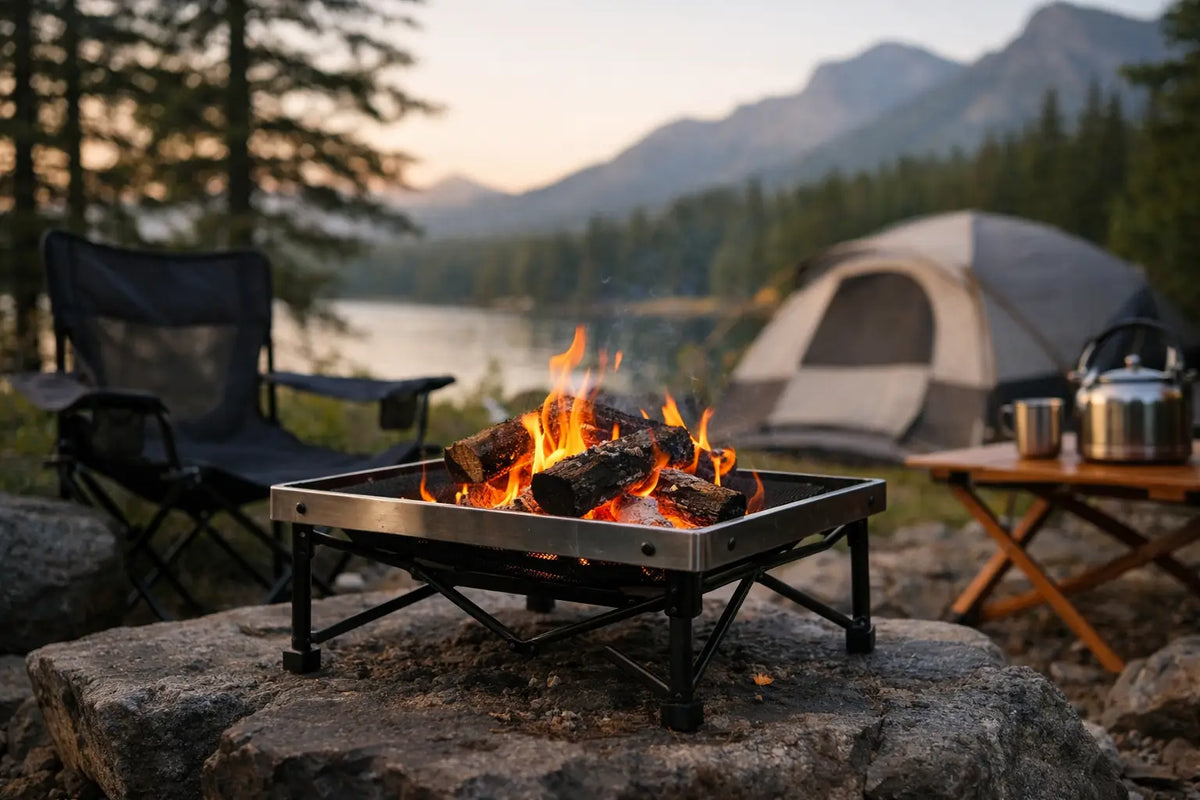
A good campsite fire should feel like the center of the evening, not the most complicated piece of gear you packed. An elevated fire pit for camping changes the equation by lifting the burn off the ground, giving your group a more deliberate place for warmth, food, and conversation - even when a built-in fire ring is not part of the plan.
That height is not just a visual detail. It affects where heat goes, how ash is contained, how easily you can tend the fire, and whether the setup can do more than provide a flame to stare at. For campers who want a cleaner camp kitchen and a more comfortable place to gather, an elevated design is a meaningful upgrade from a loose ring of stones or a disposable ground-level fire bowl.
Why an elevated fire pit earns space in camp
Traditional campfires are simple, but simplicity comes with compromises. They can leave a scorched patch of ground, spread ash when the wind changes, and put the cooking surface at an awkward height. They also tend to make fire management feel improvised. That may be part of the appeal on a remote trip, but it is less useful at established campgrounds, overland sites, or shared spaces where the goal is a controlled, welcoming setup.
An elevated fire pit places the burn chamber above the surface. This creates separation between the fire and the ground while bringing the flame closer to a usable working height. You can add wood without crouching in the dirt, keep cookware within reach, and gather around a defined focal point rather than a smoky patch of earth.
The best designs also make the campsite feel more intentional. A compact fire pit can arrive folded or broken down into manageable components, then become the heart of camp once it is assembled. It is a practical piece of equipment, but it also sets the tone: dinner takes its time, the coffee stays warm, and nobody needs an excuse to remain outside a little longer.
What to look for in an elevated fire pit for camping
Not every raised fire pit is built for travel. Some are backyard pieces with camping in their marketing, while others are genuinely designed around packability, uneven terrain, and repeated setup. The right choice depends on how you camp, how many people you cook for, and whether the fire pit is primarily for warmth, grilling, or both.
A stable footprint on real terrain
Campsites are rarely level patios. Look for a base that spreads its load securely and resists rocking on compacted dirt, gravel, or a slightly uneven pad. Wide, thoughtfully positioned legs matter more than decorative height. Before lighting anything, test the setup with a firm push from a few angles and adjust the ground beneath it if needed.
Elevation should not mean a tall, top-heavy structure. The goal is a confident stance with enough clearance below the fire bowl or chamber to protect the surface and make cleanup easier. If you camp on soft ground, a broader base or a protective pad may be useful, depending on campground rules.
Materials that handle heat and travel
Camping gear sees more than fire. It gets loaded into vehicles, exposed to morning dew, knocked against coolers, and stored between trips. Heat-resistant steel construction is a sensible starting point, but the design of the panels, joints, and hardware matters just as much.
A thin, lightweight pit may be easy to carry, yet it can warp over time or feel unstable when loaded with wood. A heavier system often feels more substantial and retains heat well, but it may not suit a walk-in site. There is no universal ideal. Car campers and overlanders can reasonably prioritize durability and cooking capacity; hikers need a different category of lightweight, leave-no-trace solution.
Choose equipment with a realistic packed form, durable connection points, and surfaces that can be cleaned without turning maintenance into a project. A fire pit is meant to collect a little soot and character. It should not become fragile because it has been used as intended.
Airflow you can work with
Fire is more enjoyable when it responds predictably. Purposeful airflow can help wood catch more efficiently, keep flames lively, and reduce the heavy smoke that sends everyone scrambling to a new chair every few minutes. No fire pit can eliminate smoke in every condition - wet wood, wind direction, and poor fuel choices still matter - but well-placed vents and an open burn geometry make a noticeable difference.
Look for an arrangement that allows oxygen to reach the fuel while giving ash somewhere to settle. A fire that breathes well generally needs less constant poking, leaving more time for cooking and conversation. It also encourages a better habit: use dry, seasoned firewood sized for the chamber rather than forcing oversized logs into a compact pit.
Ash control and simple cleanup
The end of a campfire is when thoughtful engineering becomes especially valuable. An elevated fire pit should keep ash contained and make it possible to empty cooled residue without scattering it around camp. Removable ash trays, accessible lower sections, or a burn chamber that can be tipped carefully after cooling all make the job easier.
Always let ash cool completely before handling it, and follow the rules of the campground or land manager for disposal. Some places require all ash to remain in a designated fire ring; others prohibit wood fires entirely during dry conditions. A portable pit does not override local fire restrictions. It gives you a cleaner tool when fires are permitted.
Make the fire pit part of your camp kitchen
The real advantage of a premium elevated system is versatility. A fire pit that only burns wood is useful. One that can accept a grill grate, cooking stand, pot support, or adjustable-height accessory becomes the foundation of an outdoor kitchen.
Height adjustment is especially valuable because live-fire cooking is about distance from heat, not just temperature. Sear vegetables or burgers closer to the coals, then raise a grate to slow things down. Suspend a Dutch oven or kettle where it can hold steady heat. Keep a pan warm at the edge while the next batch cooks. These small controls turn fire cooking from guesswork into a rhythm.
Modular systems are worth considering if your trips vary. On a one-night campground stay, you may want a compact fire bowl and a simple grate. For a long weekend with friends, a larger grill surface and dedicated cooking accessories can earn their place in the vehicle. The Landmark system from WOOD&BURN is built around this idea: one fire-centered platform that can shift between warmth, grilling, and open-fire cooking without requiring an entirely separate setup for each task.
Do not confuse modularity with buying every accessory at once. Start with the way you actually camp. If you mostly make coffee and warm a skillet, a stable grate may be enough. If your group plans meals around the fire, expand from there.
Set up with the campsite in mind
Where you place the pit matters as much as which one you bring. Start with the rules for your site and use a designated fire area whenever required. Keep the pit clear of tents, dry grass, low branches, vehicle awnings, and anything that can be damaged by radiant heat or drifting sparks. Wind can turn a calm-looking flame into a different situation quickly.
Bring a way to extinguish the fire fully, such as water and a shovel where appropriate. Keep wood staged neatly rather than piled against the pit, and never leave the fire unattended. If conditions are windy or a burn ban is in effect, the best fire pit is the one that stays packed away.
For cooking, give yourself a small work zone beside the fire rather than directly in front of it. A camp table for ingredients, tongs, and plates keeps the experience relaxed and helps prevent the familiar scramble for tools once the coals are ready. A little organization lets the fire feel generous instead of demanding.
The payoff is a better kind of evening
An elevated fire pit for camping is not necessary for every trip. A quiet night with a backpacking stove and an early start may call for less gear, not more. But when the plan is to cook slowly, host friends, or make a standard campsite feel considered, a raised, adaptable fire system changes what the evening can hold.
Choose one that fits your vehicle, your cooking style, and the places you are allowed to use it. Then give it a simple job: hold the fire well enough that everyone else can settle in around it. The meals may be memorable, but often it is the unhurried hour after dinner that becomes the place you'll always remember.
Share:
Modular Fire Pit System for Better Gatherings
Charcoal Grill With Low Flare Ups: Cook Calmly