

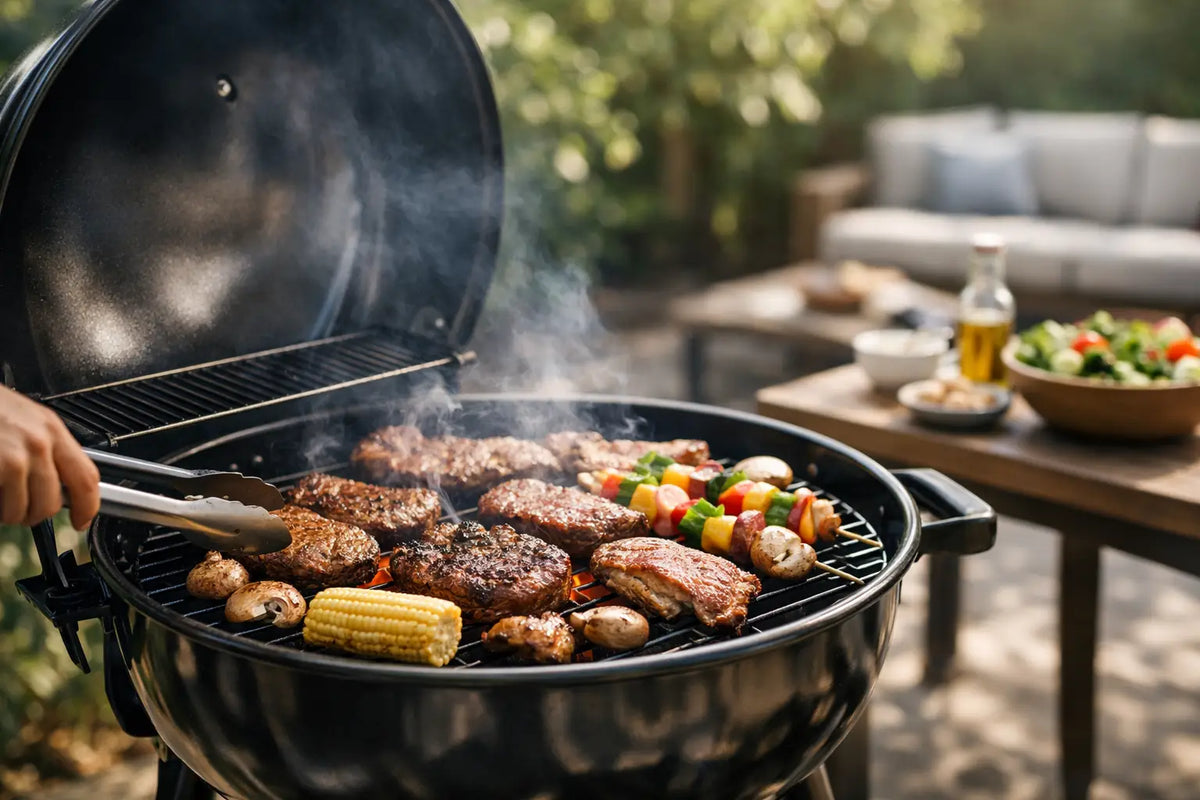
A good charcoal grill with low flare ups changes the entire rhythm of cooking outside. Instead of hovering over the grate, rescuing chicken from sudden flames, or watching a beautiful cut of meat turn black at the edges, you can cook with confidence and stay present with the people around you. The fire is still alive. It simply works with you.
Flare-ups are part of charcoal cooking, especially when fat meets hot coals. The goal is not to eliminate every flicker of flame. It is to create a grill setup that keeps those moments brief, contained, and manageable - so the flavor comes from charcoal and careful cooking, not burnt grease.
What Causes Flare-Ups on a Charcoal Grill?
A flare-up begins when rendered fat, sugary marinade, or drippings reach the fuel below the cooking surface. The fuel ignites the drippings, and the resulting flame rises quickly toward the food. On a basic open grill, there is little between the coals and the grate, so the reaction can be immediate.
That does not mean charcoal itself is the problem. Charcoal delivers the direct heat, smoke, and ritual that make live-fire cooking worth doing. What matters is how that heat is organized. Distance from the fuel, airflow control, grate height, and space for indirect cooking all influence whether a grill feels composed or unpredictable.
Food choice matters, too. Skin-on chicken thighs, burgers with a higher fat percentage, rib-eye, sausages, and sticky sauces naturally create more drippings. Lean vegetables, fish, and trimmed cuts are less likely to provoke flames. A well-designed grill gives you options for both, rather than asking you to cook every ingredient over one aggressively hot zone.
The Design Details That Keep Fire Under Control
Low-flare-up performance is rarely one feature. It is the result of several design decisions working together.
Adjustable grate height creates breathing room
The closer food sits to the coal bed, the more quickly drippings ignite and reach the surface. A grill with an adjustable cooking grate lets you raise food away from intense heat when fat begins to render or when a fire burns particularly hot.
This is especially useful for longer cooks. You can begin closer to the heat to build color, then lift the grate to finish at a calmer pace. For vegetables, skewers, and delicate proteins, the extra distance can be the difference between a proper char and a scorched exterior.
Two-zone cooking gives flames somewhere else to be
A charcoal grill with low flare ups should make two-zone cooking easy. This means arranging coals on one side of the firebox, leaving the other side without direct fuel beneath it. One side becomes the searing zone. The other becomes a cooler area for indirect cooking and recovery.
When flames rise under a burger or chicken thigh, moving it a few inches to the indirect side is more effective than repeatedly flipping it over the fire. The flare-up loses fuel, the food avoids a bitter crust, and you keep control of the cook.
For a small group dinner, this setup is remarkably flexible. Sear steaks over the coal side, finish thicker cuts indirectly, and keep vegetables warm where the heat is gentler. It turns one grill into a more capable outdoor kitchen.
Airflow should be controllable, not excessive
Fire needs oxygen. A grill that sends a constant blast of air through the coals can create intense temperatures, but intensity is not always precision. Adjustable vents or a thoughtful airflow path help regulate the burn rate, making it easier to hold a cooking temperature that suits the food.
Open vents wider when lighting charcoal and establishing a coal bed. Once the coals are glowing and lightly coated in ash, reduce airflow as needed to avoid a needlessly aggressive fire. The exact setting depends on weather, charcoal type, and grill design, but the principle remains steady: build the fire you need, not the largest fire possible.
A stable firebox makes a meaningful difference
A shallow or cramped charcoal area often forces food close to the fuel. A deeper, well-proportioned firebox gives the coal bed room to burn while preserving useful distance to the grate. It also helps contain ash and embers when you add fuel or reposition coals.
This is where refined grill engineering earns its place. A compact grill can still offer real control when its proportions support both direct and indirect heat. At WOOD&BURN, the best outdoor equipment is not defined by excess. It is defined by making live fire more intuitive, portable, and enjoyable to share.
How to Set Up a Lower-Flare-Up Charcoal Fire
The first decision happens before food reaches the grate. Start with fully lit charcoal, not a patchwork of black briquettes and active flame. Coals are ready when most are covered with a soft gray-white ash and the fire has settled into a consistent glow.
Arrange the coals to create a hot zone and an indirect zone. A charcoal basket can make this easier, but a pair of tongs and a clear plan work just as well. Keep the hottest coals in a defined area rather than spreading them evenly across the entire grill. Even heat sounds desirable, yet it removes your escape route when drippings catch.
Let the grate preheat, then clean it thoroughly. Old grease and food residue are flare-up fuel waiting to ignite. A clean, lightly oiled grate also releases food more easily, which means fewer torn pieces and fewer accidental drops into the fire.
If you are cooking fatty food, trim loose exterior fat before it reaches the grill. You do not need to remove all fat - that would sacrifice flavor and texture. The aim is to remove the pieces likely to drip heavily and ignite. Apply sweet sauces near the end of cooking, since sugar darkens quickly over direct heat.
When a Flare-Up Happens, Move First
The instinct is to poke at the coals or spray the flames with water. Neither is usually the best first move. Water can spread ash, create steam, and leave a mess inside the grill. Disturbing the coals can make the situation less predictable.
Move the food to the indirect zone or raise the grate if your grill allows it. Then close the lid briefly, if the design supports lid-on cooking, to reduce oxygen around the flame. Once the flare-up settles, return the food to direct heat only when you are ready.
Keep the lid within reach and use long-handled tongs. Those two simple habits make live-fire cooking feel less reactive. You are not fighting the grill. You are guiding the fire.
The Trade-Off: Less Flare-Up Does Not Mean Less Char
Some cooks worry that a calmer charcoal setup will produce less flavor. In practice, controlled heat often gives better results. You can still sear a steak hard over glowing coals, blister peppers, and create crisp chicken skin. The difference is that you decide when the food meets high heat and when it needs space.
There is a trade-off. A two-zone setup may not cook as many items at once over direct heat, particularly on a compact grill. For a crowd, cook in stages: sear in batches, then move food to the indirect side to finish or rest. The pace is slightly more deliberate, but the food is more consistent and the person cooking is not isolated from the gathering.
Wind is another variable. A breezy campsite can feed a fire from unexpected angles, while a sheltered patio can retain heat more efficiently. Adjust the coal quantity and vent settings to the conditions rather than relying on a single fixed method.
Choose Control for the Meals You Want to Make
The best charcoal grill is not necessarily the one that burns hottest. It is the one that lets you grill a fast lunch, cook a slow dinner, and stay relaxed when the menu includes fat, marinades, and hungry guests. Look for adjustable cooking height, a practical way to create separate heat zones, dependable airflow management, and a firebox that gives the coals and food enough room.
A well-managed charcoal fire does more than prevent burnt edges. It keeps the evening open: for another round of vegetables, a steak cooked exactly as intended, and the unhurried conversation that makes an outdoor meal a place you'll always remember.
Share:
Choosing an Elevated Fire Pit for Camping
How to Cook Over Open Fire With Better Control