

A good fire meal does not begin when the pan hits the grate. It begins 30 minutes earlier, when you decide whether you need flame, coals, or both. Learning how to cook over open fire is less about surviving with primitive tools and more about reading heat well enough to make dinner feel unhurried.
Live-fire cooking rewards attention. The wood shifts, the wind changes, and a cast-iron skillet can move from gently sizzling to scorching in a minute. That is the appeal. With a considered setup and a little patience, the fire becomes more than a source of warmth. It becomes the center of a meal people will remember.
Build a Fire for Cooking, Not Just a Big Flame
The tall, bright flames of a newly built campfire look dramatic, but they are rarely the best place to cook. Flames are inconsistent, often too hot, and likely to leave food blackened outside before the center is ready. For most open-fire meals, the real cooking fuel is a bed of glowing hardwood coals.
Start with dry, untreated hardwood. Oak, hickory, maple, and ash burn steadily and create durable coals. Softer woods can get a fire going quickly, but they burn faster and throw more sparks. Avoid painted, stained, pressure-treated, or driftwood pieces. They can release chemicals or create a harsh, unpredictable burn.
Let the first load of wood burn down until you have a broad layer of red-orange embers with a light coating of ash. That usually takes 25 to 45 minutes, depending on the wood, weather, and fire structure. Rake those coals into zones: a deeper pile for high heat, a thinner layer for moderate heat, and an edge with very little coal for holding food warm.
This simple move gives you control without a dial. If steaks are taking on color too quickly, slide them to a cooler zone. If a Dutch oven needs a stronger simmer, bring a few more coals beneath it. Good fire cooking is often just thoughtful repositioning.
Choose the Right Open-Fire Setup
There is no single best way to cook over a fire. The right arrangement depends on what you are making, how many people are eating, and whether you are at a campsite or in the backyard.
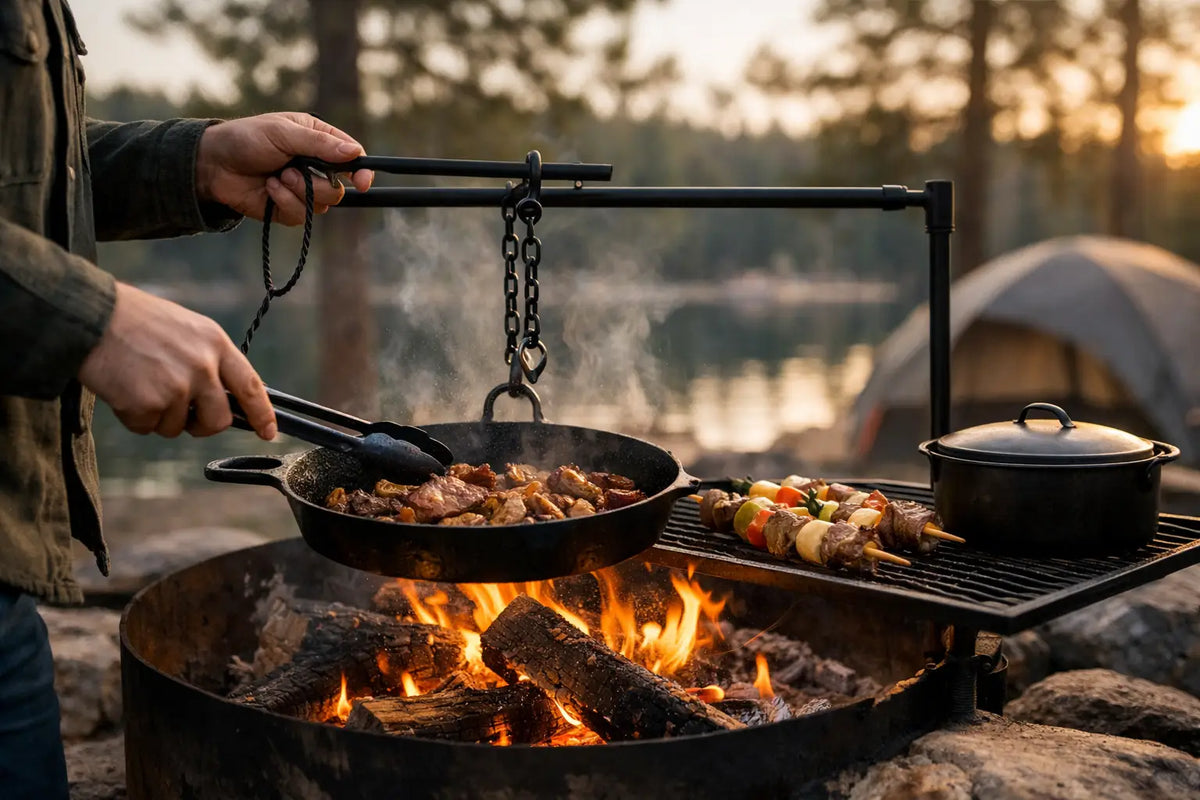
A grill grate over coals is the most flexible starting point. It works for vegetables, skewers, burgers, fish in a basket, and a skillet of breakfast potatoes. Keep the grate adjustable if possible. Height is your first line of defense against excess heat, and even a few inches can change the pace of cooking dramatically.
A tripod or hanging chain is especially useful for Dutch ovens, kettles, and pots of beans or stew. The food cooks with more distance from direct heat, making it easier to maintain a gentle simmer. For a skillet, plancha, or griddle, a stable fire pit with a dedicated cooking surface gives you a more controlled, comfortable working height.
A modular setup earns its place because one fire can change jobs throughout the evening. You might begin with a low grill for charred vegetables, raise the surface for chicken, then clear space for a kettle of cider while everyone settles around the warmth. Systems such as the WOOD&BURN Landmark are designed around that kind of adaptable gathering, where the fire shifts naturally from kitchen to hearth.
How to Cook Over Open Fire Without Burning Dinner
The fastest way to improve is to stop treating every part of the fire as equally hot. Use the back of your hand as a quick guide, holding it safely several inches above the grate. If you can only keep it there for two to three seconds, you are working over high heat. Four to six seconds is medium heat. Longer than that is gentle heat or a warming zone. Never put your hand directly over flames or use this test where a flare-up is likely.
For direct cooking, place food over the hottest coals and stay nearby. This is the right approach for thin cuts, toasted flatbreads, shrimp, asparagus, and foods that benefit from a quick sear. Oil food lightly rather than pouring oil into the pan or onto the grate. Drips feed flare-ups, which can turn a beautiful crust into bitter char.
For thicker food, use a two-stage approach. Sear it over the hotter zone, then move it to a cooler area to finish. Bone-in chicken, pork chops, sausages, and dense vegetables need this breathing room. Close proximity to the fire is not a measure of skill. Even heat is.
Lidded cookware changes the equation. A Dutch oven or covered skillet holds heat around the food, allowing you to bake, braise, and simmer with far less babysitting. Coals beneath the vessel provide bottom heat; coals arranged on the lid provide top heat. This is how a fire can produce tender short ribs, cornbread, cobbler, or a pot of chili without relying on open flame.
Match the Food to the Fire
Open-fire cooking becomes easier when you choose foods that welcome a little char and variation. Start with ingredients that are forgiving: corn in its husk, mushrooms, onions, peppers, potatoes wrapped in foil, thick slices of bread, and sturdy fish. These foods give you time to learn the behavior of your fire.
Then build toward meals with layers. Grill marinated chicken thighs while onions soften in a skillet nearby. Char tortillas at the edge of the grate and serve everything family-style. Cook a pot of tomatoey beans over lower coals while steaks rest. The point is not to make every component at the exact same temperature. It is to use different zones with intention.
Delicate foods need a barrier. A cast-iron pan, griddle, cedar plank, foil packet, or grill basket protects flaky fish, eggs, and smaller vegetables from falling through the grate or absorbing too much smoke. Smoke should season the meal, not dominate it. If it tastes acrid, your fire may be burning damp wood, receiving too little airflow, or catching excessive drippings.
Use Cast Iron, But Respect Its Heat
Cast iron is a natural partner for live fire because it absorbs heat slowly and holds it well. That same quality can surprise cooks who are used to a gas burner. A pan that seems manageable can remain intensely hot long after you move it away from the coals.
Preheat cast iron gradually at the edge of the fire before moving it closer. Add a small amount of high-heat oil, then listen for a controlled sizzle rather than an immediate roar. If the oil smokes aggressively, the pan is too hot. Pull it back, wait, and try again.
Use long tongs, heat-resistant gloves, and a clear landing spot for hot cookware. A flat stone, steel side table, or heat-safe trivet beside the fire is not a luxury. It prevents the awkward moment when dinner is ready but there is nowhere safe to set a 500-degree skillet.
Keep the Fire Clean and the Cooking Calm
A well-managed fire is safer, cleaner, and more enjoyable to cook over. Give it enough airflow to maintain coals, but avoid building a huge stack of wood all at once. Add smaller pieces as needed. This keeps heat more consistent and prevents a sudden surge of flame just as food reaches the grate.
Keep water or an extinguisher nearby, particularly in dry conditions. Check local fire restrictions before lighting anything, and never cook under low branches, inside a tent, or on an unstable surface. If wind is pushing smoke and sparks toward guests, reposition the seating or reduce the fire rather than trying to outwait the weather.
Clean tools matter, too. Brush the grate while it is hot, scrape pans after cooking, and store ashes only after they are fully cold. Live-fire cooking is tactile, but it should not be chaotic. A few habits protect the equipment and leave more room for the people around it.
Let the Fire Set the Pace
The most memorable open-fire meals have a little margin built in. Start the fire before anyone is hungry. Prep ingredients before dusk. Serve food in rounds if that suits the group, with something warm coming off the grate while another dish finishes in the coals.
You do not need a complicated menu to make the moment feel considered. A skillet, a grate, good wood, and a meal that can tolerate the rhythm of real fire are enough. Give the coals time to become useful, and give the people around them a reason to stay a little longer.
Share:
Charcoal Grill With Low Flare Ups: Cook Calmly
How to Find the Best Fire Pit for Cooking