

A fire pit becomes a different kind of gathering place when dinner can happen over the flame. The right fire pit cooking accessories turn an open fire from a beautiful backdrop into a capable outdoor kitchen - without asking you to pack a full grill, table, and camp kitchen for every trip.
That does not mean buying every attachment available. The best setup is the one that matches how you gather: a quiet campsite breakfast for two, a long dinner under the trees, or a backyard evening where food moves easily from fire to plate. Start with control, then add the tools that give you more ways to cook.
Start With a Stable Cooking Surface
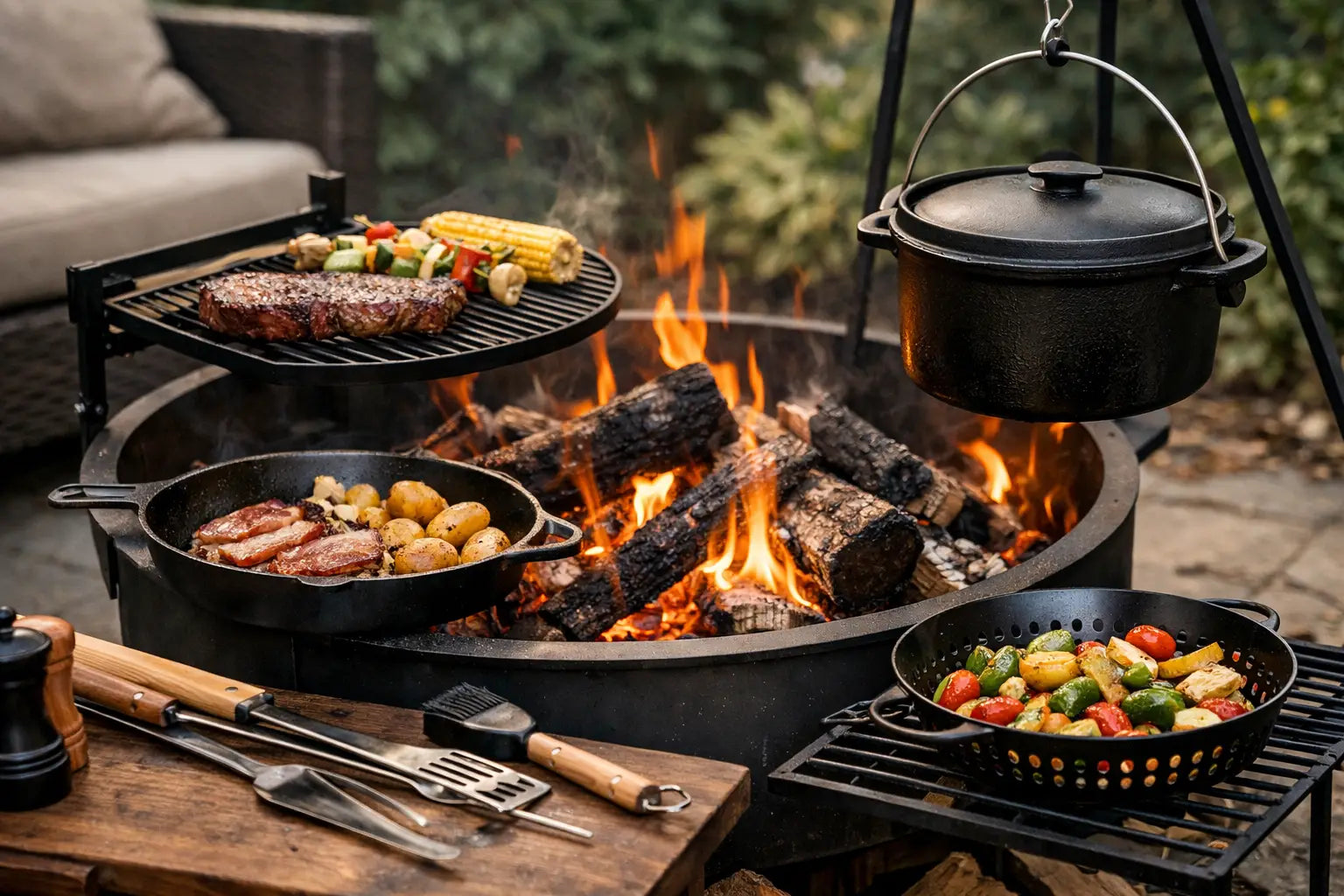
A cooking grate is the foundation of most fire pit meals. It creates distance between food and flame, gives you room to work, and makes familiar cooking possible: burgers, vegetables, sausages, fish, flatbreads, and cast-iron pans.
But a grate only performs well when it is stable and positioned at a useful height. A fixed grate can be excellent for simple, direct grilling when the fire is predictable. An adjustable grate gives you more control, especially when the wood is burning hot or the meal needs a slower finish. Raising food away from the coals can save a chicken thigh from scorching before it cooks through. Lowering it brings faster heat for a good sear.
Look for a grate with a solid frame, enough surface area for the group you actually host, and a design that does not force you to reach over the hottest part of the fire. Stainless steel is easy to maintain and well suited to repeated outdoor use. Carbon steel can hold up beautifully, too, but needs more deliberate drying and care to prevent rust.
Fire Pit Cooking Accessories for Heat Control
Live fire does not behave like a kitchen burner. That is part of its appeal, but it also means heat management matters more than adding another piece of gear. A few well-chosen accessories help you work with the fire rather than chase it.
Adjustable arms and hanging systems
A swing arm or height-adjustable cooking system gives you a meaningful advantage over a basic grate. You can move a Dutch oven or grill surface closer to the coals, then shift it away as the fire changes. This is particularly useful for braises, chili, coffee, and anything that needs steady heat instead of aggressive flame.
For campsite cooking, a modular system also earns its space because it can adapt through the day. Hang a pot for morning oatmeal, set a grate for lunch, then clear the surface for an evening fire. The equipment should support the rhythm of the gathering, not turn every meal into a setup project.
Fireproof gloves and long-handled tools
A quality pair of heat-resistant gloves is less glamorous than a grill grate, but it may be the accessory you use most. It lets you reposition logs, shift a hot grate, handle a Dutch oven bail, or move cookware with more confidence. Choose gloves that protect past the wrist and still allow enough dexterity to work safely.
Long-handled tongs, a turner, and a poker belong nearby as well. The goal is simple: keep hands away from heat, avoid awkward reaches, and make small fire adjustments before they become big problems. Short tools designed for an indoor skillet rarely offer enough distance around a live fire.
A coal rake or ash shovel
Direct flames look dramatic, but glowing coals are usually the better cooking fuel. A coal rake or compact ash shovel lets you arrange them into a more even bed beneath the grate. Bank coals to one side for a two-zone setup, with high heat on one side and a gentler holding area on the other.
This small shift changes what you can cook. Sear steaks or char corn over the hotter section, then move them to the cooler side to finish. It also helps when guests arrive at different times and dinner needs to stay warm without drying out.
Choose Cookware That Belongs Near a Fire
Not every pan is suited to open-fire cooking. Lightweight cookware with plastic components, thin nonstick coatings, or unstable handles can become a liability around intense heat. Cast iron, enameled cast iron, and heavy-gauge stainless steel are more reliable choices.
A cast-iron skillet is the most useful first addition. It can cook bacon and eggs at sunrise, brown onions for camp chili, sear a steak, or bake a crisp-edged cornbread in a covered fire pit. Its weight is a trade-off for car camping and backyard use, but less appealing when every ounce matters on foot.
A Dutch oven brings another level of range. With coals beneath and on top of the lid, it works as an outdoor oven for stew, cobbler, bread, and slow-cooked beans. It rewards patience and steady coal management. If your usual fire pit meal is a quick burger dinner, it may be more capacity than you need. If cooking is central to the trip, it quickly becomes the piece everyone gathers around.
For smaller groups, a grill basket can be a smart alternative to a larger cookware collection. It keeps mushrooms, shrimp, diced vegetables, and other small ingredients from falling through the grate while still allowing smoke and flame to do their work.
Build for the Way You Host
The most refined outdoor setups do not feel overbuilt. They feel ready. Think about the meals you return to and the number of people you regularly feed.
For two to four people, an adjustable grate, cast-iron skillet, tongs, gloves, and coal rake cover a surprising amount of ground. This compact kit handles breakfast, one-pan dinners, and direct grilling without crowding the vehicle or patio storage.
For larger groups, add a broader grill surface and a Dutch oven or hanging pot. You will gain the ability to cook in parallel: vegetables on the grate while a pot simmers nearby. That matters when people are hungry and the fire is the center of the evening.
Backyard hosts can prioritize versatility and presentation. A purposeful cooking system keeps the fire area organized, makes it easier to serve food at the right moment, and avoids the familiar problem of one person crouched over a makeshift grate while everyone else waits. Campers and overlanders may value packability more highly, choosing components that nest, fold, or serve more than one role.
WOOD&BURN designs this kind of adaptability into its Landmark fire pit system, where dedicated cooking accessories and adjustable configurations let the fire shift from warmth to meal-making without losing its sense of occasion.
Do Not Overlook the Prep and Cleanup Layer
Cooking over fire starts before the match and continues after the last plate is cleared. A compact prep surface or heat-safe side table gives raw ingredients, seasonings, and finished food a place to land. It also reduces the temptation to balance a hot pan on the ground, a cooler, or the edge of the fire pit.
Bring a small tray or bin for tools. Keeping tongs, gloves, and a poker together makes the area safer and prevents ash-covered handles from drifting onto the serving table. A fitted cover is equally practical for a backyard fire pit, protecting the cooking surface between gatherings and reducing the cleanup waiting for you next time.
Avoid pouring water directly onto a hot metal fire pit simply to speed up cleanup. Let coals burn down naturally when possible, then remove cold ash according to local rules. Ash is easier to manage when the fire pit has fully cooled, and careful cleanup helps preserve both the finish and the cooking components.
Let the Fire Set the Pace
The best fire pit meals are not complicated because they do not need to be. Put a skillet of peppers over the coals while bread warms on the grate. Cook potatoes in foil at the edge of the fire while something more immediate sears in the center. Give food time to take on smoke, color, and the occasional char that cannot be replicated indoors.
Choose accessories that make this kind of cooking calmer, safer, and more flexible. Then leave room for the part no tool can manufacture: people standing close to the warmth, trading stories while dinner cooks, and deciding to stay outside a little longer.
Share:
How to Choose a Compact Stove for Overlanding
How to Control Campfire Smoke for a Cleaner Fire