

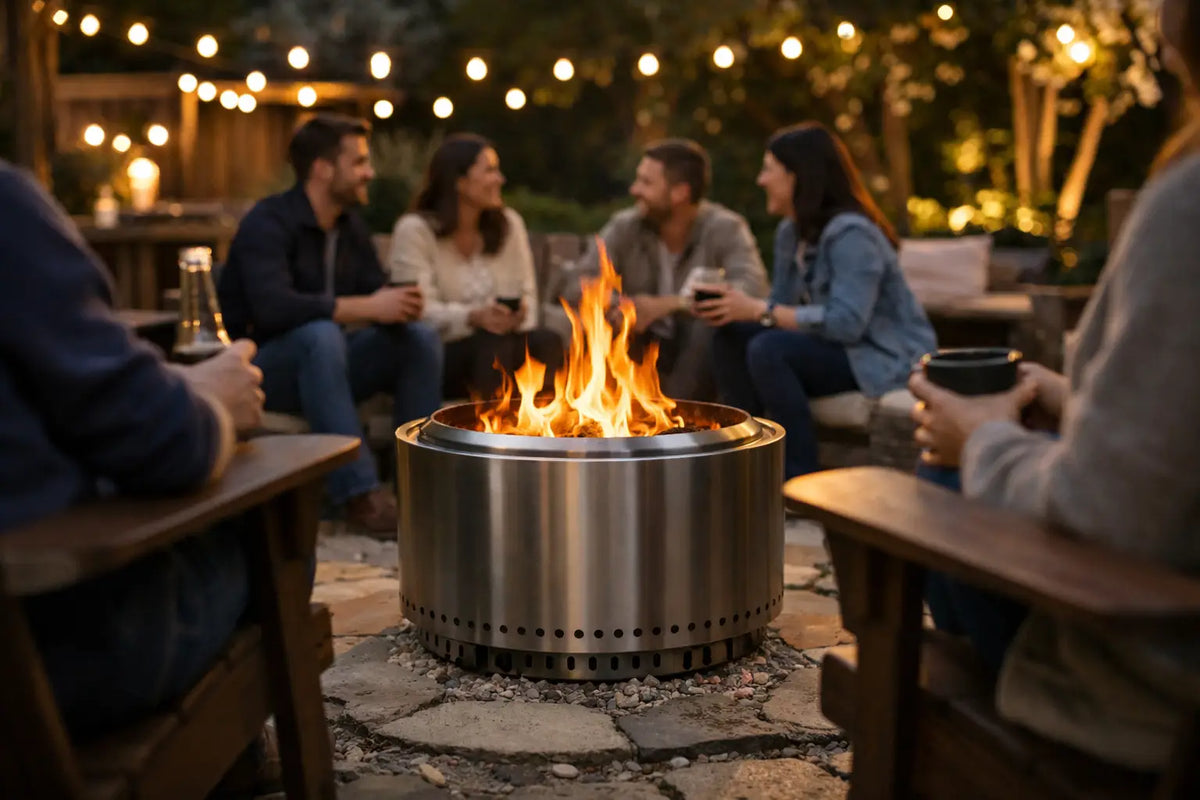
A smokeless fire pit for backyard use changes the part of the evening nobody talks about until it goes wrong: where the smoke goes. Instead of guests shifting chairs every few minutes or heading inside with smoke in their hair, a well-designed fire pit keeps the flame more contained, the view clearer, and the gathering in motion.
That does not mean fire without any smoke. Wood is wood, and a fresh log can still send up a little haze. What good engineering can do is burn fuel more completely, directing heated air where it is needed and reducing the heavy, lingering smoke that makes a traditional backyard fire feel less inviting.
For a backyard built for dinners, slow conversations, and the occasional open-fire meal, that difference matters. The right fire pit becomes more than a feature at the edge of the patio. It becomes the reason people stay outside longer.
What Makes a Fire Pit Smokeless?
The word “smokeless” is often used as a promise, but the performance comes down to a straightforward principle: combustion needs enough heat, oxygen, and dry fuel. When one is missing, wood smolders. When all three work together, the fire burns hotter and more cleanly.
A thoughtful smokeless design usually manages airflow in two stages. Air enters near the base to support the coal bed, while secondary air is heated as it travels through the fire pit’s walls. That hot air is released above the flames, where it helps burn off some of the particles that would otherwise become visible smoke.
The result is a livelier fire with less eye-watering drift. It also tends to leave behind finer ash and makes it easier to enjoy the flame from every seat around the circle. The effect is most noticeable once the fire is established. During startup and when adding a new log, a brief amount of smoke is normal.
The fuel still decides a lot
Even the best airflow system cannot make wet wood burn cleanly. Use seasoned hardwood with a moisture content around 20 percent or lower. Dense woods such as oak, hickory, maple, and ash generally create long-burning coals, while kiln-dried firewood offers a dependable option when you want an easy, clean start.
Avoid oversized logs that choke the fire chamber, and do not overload the pit just because there is room. A smaller, well-fed fire has better access to oxygen than a pile of wood trying to burn all at once. Painted lumber, pressure-treated wood, construction scraps, and trash do not belong in any backyard fire pit.
Choosing a Smokeless Fire Pit for Backyard Space
Start with the way your backyard is actually used, not with the biggest fire pit you can fit. A compact courtyard or apartment patio needs a different footprint from a broad lawn where ten friends gather after dinner. The goal is enough warmth and visual presence without turning the fire into an obstacle.
Think about the seating circle first. Guests should be able to feel the heat without sitting so close that they need to lean away from it. Leave room for chairs to move, for someone to add wood safely, and for a clear path back into the house. If the pit will sit near a deck, fence, pergola, or outdoor kitchen, follow its clearance guidance carefully and check local fire rules before lighting up.
A freestanding, portable model can be a better long-term choice than a built-in pit if your outdoor plans are still evolving. You can move it from lawn to gravel, take it camping, or create a different layout for a larger gathering. A fixed installation may suit a permanent entertaining area, but it gives up that flexibility.
Match the fire pit to the kind of evening you host
If your ideal night is two people with a bottle of wine and a small fire, prioritize a manageable size, fast setup, and easy ash removal. If your backyard is where friends gather for dinner, look for a wider fire bowl and a stable, intentional seating radius.
Cooking changes the decision again. A fire pit that accepts a grill grate, pot support, or adjustable cooking accessory can carry the evening from first flame to late dessert. That modular approach is especially useful for people who do not want separate equipment for warmth, grilling, and campsite cooking. Systems such as WOOD&BURN’s Landmark series are designed around that kind of adaptable live-fire use.
The trade-off is simple: the more functions a fire pit can support, the more you should consider how often you will use each one. A dedicated warmth-first pit may be lighter and quicker to handle. A cooking-capable system brings more range, but asks for a little more intention in setup and cleanup.
Materials, Shape, and the Details You Notice Later
Premium fire pits earn their place through the details that keep working after the first impressive burn. Material is one of them. Stainless steel is valued for its clean appearance, corrosion resistance, and relatively light weight. It can develop heat color over time, which many owners see as part of its character. Coated steel and cast iron can offer substantial heat retention and a grounded, architectural look, though they require more attention to moisture and surface care.
The fire pit’s shape also affects the experience. A deeper chamber can contain logs and create a focused flame. A wider opening offers more visibility and may better suit social seating or grilling. Raised designs can feel lighter in a landscaped space and make ash access easier, while low-profile bowls create a more classic campfire atmosphere.
Look beyond the flame itself. A removable ash pan, stable base, protective cover, and parts that are easy to clean will influence how often you use the pit. The best backyard equipment does not ask you to prepare for an hour just to enjoy a 45-minute fire.
Set It Up for a Cleaner Burn
Where you place a fire pit matters as much as which one you choose. Put it on a noncombustible, level surface such as pavers, gravel, stone, or a manufacturer-approved heat-resistant pad. Keep it away from low branches and dry landscaping. Even a cleaner-burning fire produces real heat, sparks, and ash.
Begin with a small structure of dry kindling and split wood rather than a dense stack of large logs. Let the first pieces catch fully, then add fuel gradually. Once the coal bed is glowing, the airflow system can do the work it was designed to do.
Resist the urge to constantly rearrange the wood. Opening up the fire too often can interrupt the burn and send smoke toward your guests. A poker is useful, but patience is better. If smoke suddenly increases after the fire has been burning well, check for a damp log, a log blocking airflow, or a fire that has been overloaded.
Wind is the variable no fire pit can eliminate. A gusty evening may push smoke in unexpected directions, regardless of the pit’s design. In those conditions, use a smaller fire, adjust seating, or save the full gathering for a calmer night. Cleaner fire is not the same as zero maintenance or zero weather awareness.
Care That Keeps the Experience Refined
Let ash cool completely before removing it, ideally overnight. Emptying ash regularly protects airflow and keeps the fire chamber ready for the next use. A small layer of ash is not necessarily a problem, but a deep buildup can restrict the intake area that supports efficient combustion.
After the pit is cool, brush away loose residue and wipe dry surfaces as needed. Store removable cooking accessories clean and dry, especially after food has been over the fire. A fitted cover helps keep out rain, leaves, and debris, but it should only go on once the unit is fully cool.
A fire pit will show use. Heat marks, darkened metal, and the subtle patina of repeated evenings outside are not failures of the object. They are evidence that it has done its job: made a place for people to gather.
Choose the fire pit that fits your space, feed it dry wood, and give the flame room to breathe. Then let the evening take over - the meal runs longer, the conversation slows down, and your backyard becomes a place you will always remember.
Share:
How to Choose a Campfire Cooking Grill Grate
How to Choose a Compact Stove for Overlanding